Module 4: Teaching and Assessment
Module 4 of 7
What You Will Be Able to Do
- Identify the teaching tasks where AI assistance is currently strongest and weakest.
- Use a reliable workflow for drafting assessment items with AI.
- Set AI expectations for your own course deliberately rather than by default.
The Core Idea
The Three-Minute Version
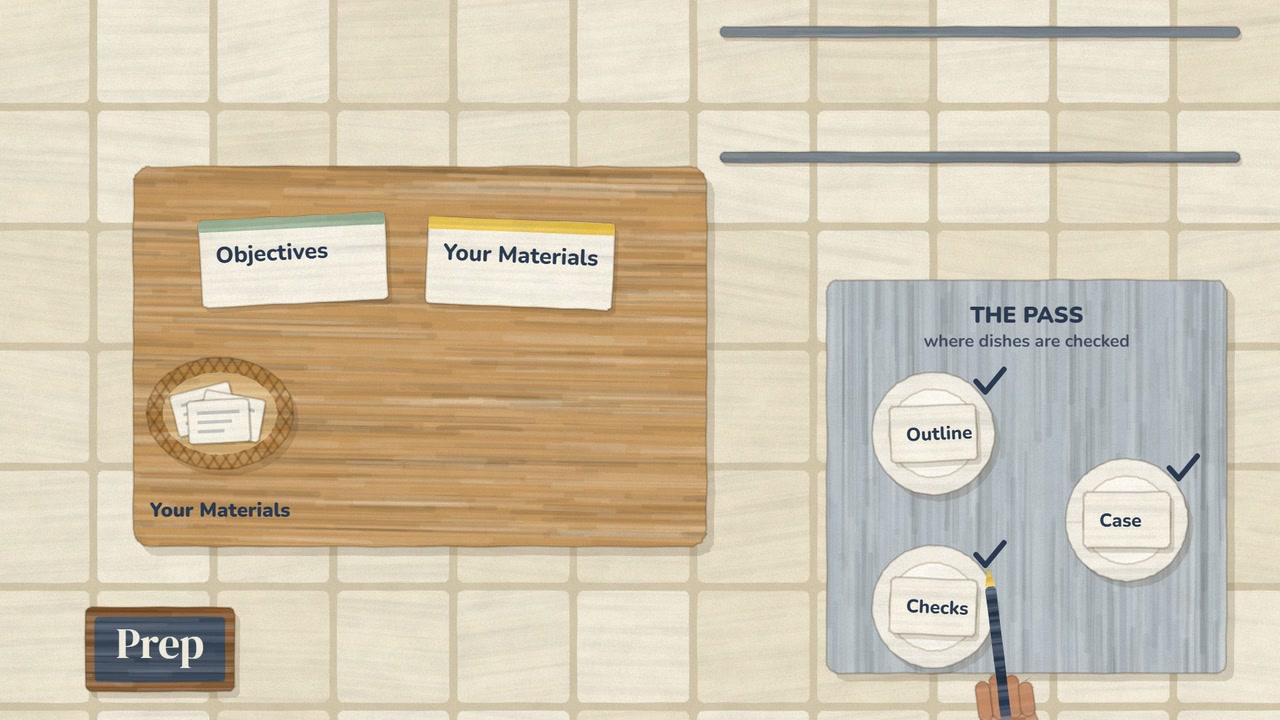
For educators, artificial intelligence (AI) is at its best on structured generation from your materials: outlines, cases, vignettes, draft questions, rubrics, explanations at a chosen level, and alternative examples when students need a concept approached differently. It is weakest exactly where your judgment is the job: deciding what matters for your learners, judging clinical accuracy, and evaluating real student work fairly.
Content and Session Preparation
The Preparing a Lecture playbook walks the full workflow. The pattern generalizes: feed the model your objectives and materials, ask for structure plus active-learning checks, then apply your expertise to what comes back. The accuracy of anything that reaches students is yours to confirm.
Assessment Writing
AI drafts plausible multiple choice questions (MCQs) quickly, and the evidence so far says quality is usable but uneven, with structural flaws that standard item-writing rules catch. One practice keeps the workflow reliable: review every AI-drafted item for accuracy and blueprint fit before it is used, because that review is where the flaws get caught and only you know what the blueprint needs. The exam questions playbook gives the step-by-step, and the prompt library's item writer and flaw checker carry the studies behind this as further reading.
Evaluating Student Work
Take the names out first. The feedback is about the writing, not the writer, and leaving names out can help you read the work rather than the student. Labels such as Student A and Student B keep feedback matched to each essay, and the Feedback on Student Writing playbook covers the indirect identifiers a find-and-replace misses; the AI Responsible Use Policy is the reference for student records. AI detectors and similarity flags produce false positives, so a flag is a reason to look more closely at the work, not evidence on its own; any integrity decision rests on the work itself and on hearing from the student.
Your Course's AI Expectations
Students will use these tools; ambiguity serves no one. The policy ties labeling and attribution to academic standards and to course and departmental guidelines, which makes your syllabus the place students look for the specifics. The syllabus AI statement playbook offers adaptable templates from prohibited to encouraged-with-verification.
Where your judgment does more of the work
Content preparation
Strong leverage: outlines, cases, checks from your materials. The accuracy of what reaches students is yours to confirm.
Assessment writing
Usable but uneven drafts: review every item.
Evaluating student work
Names out first. A detector flag starts a closer look; it is not evidence on its own.
Self-Check
You want AI feedback on twelve student reflection essays. What makes that work well?
Removing names, identification numbers, and details that could identify the author, so the first reading stays on the text: the feedback needs the writing, not the writer. After that, the tool can draft feedback quickly; read and adjust it before it goes back, because you know the student and the course, and the tool does not.
An AI detector flags one student's essay at 92 percent. What does that number justify by itself?
A closer human look, and nothing more. Detector outputs are preliminary indicators with known false-positive problems. An academic integrity action needs human review of the actual evidence and an opportunity for the student to respond, not a percentage from a black box.
Going Deeper
Color key: Guide
- Feedback on Student Writing The full workflow for AI-assisted feedback on student work, de-identification included.
- Administrative Drafting The same discipline applied to memos, minutes, and reports.
- Standing Setups A project per course, so the model knows your objectives all term.
- AI-Generated Images in Teaching Why generated anatomy fails, what to reach for instead, and the conditions under which a flawed image is defensible pedagogy.
Content last reviewed September 1, 2026. Review dates are maintained as described on the About page.