Week 41, 2026
← Week 40, 2026 · All weeks in the News Archive
Highlights selected from everything kept between October 2, 2026 and October 9, 2026. Items are selected several times a day by an automated pipeline and the summaries are machine generated; follow the links to the original sources. See About for how selection works.

The week in brief
At UT Southwestern Medical Center, a multimodal artificial intelligence (AI) system called MAPLES (Multimodal Assessment Pipeline for Learning Encounter Scoring) graded Objective Structured Clinical Examinations (OSCEs) for 222 students in Fall 2025, scoring their notes, audio, and video [3]. Faculty reviewed only the low-scoring tail, where AI agreement with standardized patient evaluators ranged from 85.7 to 92.4% by modality. In 616 selected disagreements, physician adjudicators matched the AI on 76.0% of items [3]. Human scoring passes fell by 92.3% against a modeled manual comparison, which makes AI first-pass grading an operational question for assessment offices rather than a hypothetical one [3].
Clinical skills that students practice are being tested the same way. In a randomized trial, a large language model (LLM) agent took better structured ophthalmology histories than residents, but residents gained more once ocular signs were added [2]. In a retrospective study, clinicians preferred LLM-written discharge summaries for 7- to 21-day stays in 95% of encounters [5]. A meta-analysis compared automated real-time coaching with expert instruction on simulated surgical tasks [6]. The Hong Kong Academy of Medicine issued guidance on AI in postgraduate training [8], while one podcast asked whether AI-improved student work reflects actual learning [13].
Benchmarks deserve caution. Among 127,833 clinician queries to an institutional assistant, documentation and administration made up 36.2% and diagnosis only 3.7%, yet the median public benchmark contained no documentation requests [7]. That gap matters when weighing reported gains for models such as MedGemma [1]. It also matters as Utah moves toward letting an AI prescribe acne medication without prior clinician review, subject to third-party audits [4].
Written from the items highlighted below; numbered links go to the sources.
New opportunities
- PayPal AI Hackathon: newly listed (application deadline 2026-11-12)
Color key: News and Events
Medical Education
A prospective study reports deploying multimodal artificial intelligence to grade medical student objective structured clinical examinations OSCEs , evaluating its use in real assessment.
A systematic review and meta-analysis compares real-time automated coaching systems with human expert instruction for surgical skills training in simulated tasks.
The Hong Kong Academy of Medicine issued a position statement on how artificial intelligence should be used in postgraduate medical education.
Clinical Practice
Nature Medicine publishes MedGemma, an open collection of medical vision-language models based on Gemma 3 that outperform similarly sized generative models on medical image and text tasks.
A randomized clinical trial compared a large language model agent with ophthalmology residents for standardized pre-consultation, assessing how well the AI collects patient history before the visit.
Utah plans to let an AI product evaluate patients and write new drug prescriptions without prior human review, expanding its health AI pilot programs to include women's health.

A peer-reviewed study has clinicians evaluate discharge summaries generated by large language models for longer hospital stays.
A preprint argues that how clinicians actually use large language models differs from the exam-style benchmarks used to judge their readiness, questioning whether benchmark scores predict real deployment performance.
Videos
 Stanford MedAI seminar on an agentic biomedical question answering system
Stanford MedAI seminar where Nhung Nguyen presents Med.ai ASK, an agentic system that answers biomedical questions, with discussion of its design and evaluation.
Stanford MedAI seminar on an agentic biomedical question answering system
Stanford MedAI seminar where Nhung Nguyen presents Med.ai ASK, an agentic system that answers biomedical questions, with discussion of its design and evaluation.
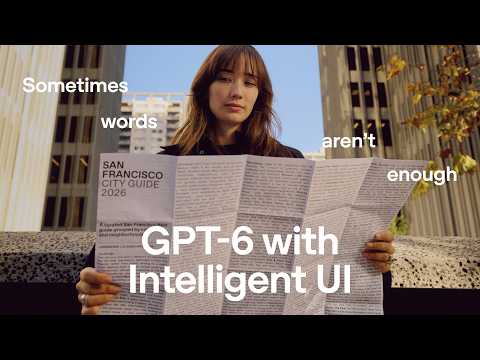 OpenAI introduces GPT-6 in ChatGPT with Intelligent UI
OpenAI announces GPT-6 in ChatGPT along with Intelligent UI, which lets ChatGPT answer with interactive interface elements rather than only text; the video demonstrates the new feature.
OpenAI introduces GPT-6 in ChatGPT with Intelligent UI
OpenAI announces GPT-6 in ChatGPT along with Intelligent UI, which lets ChatGPT answer with interactive interface elements rather than only text; the video demonstrates the new feature.
 Overview of DeepMind's AlphaGenome Atlas for genome interpretation
Covers Google DeepMind's AlphaGenome Atlas, an AI system for interpreting genome sequences, with an overview of what it predicts and why it matters for genetics research.
Overview of DeepMind's AlphaGenome Atlas for genome interpretation
Covers Google DeepMind's AlphaGenome Atlas, an AI system for interpreting genome sequences, with an overview of what it predicts and why it matters for genetics research.
 Explainer on distributing large AI models across multiple GPUs
An IBM presenter explains why the largest AI models cannot fit on one graphics processing unit GPU and how work is distributed across multiple GPUs, giving a conceptual overview of scaling.
Explainer on distributing large AI models across multiple GPUs
An IBM presenter explains why the largest AI models cannot fit on one graphics processing unit GPU and how work is distributed across multiple GPUs, giving a conceptual overview of scaling.
Podcasts
 The AI Learning Paradox: Better Results, Less Learning?
Hosts Ray and Dan discuss whether AI helps students learn or only produces better work, covering Australian universities' AI announcements UNSW, Flinders, University of Sydney and recent research on learning outcomes.
The AI Learning Paradox: Better Results, Less Learning?
Hosts Ray and Dan discuss whether AI helps students learn or only produces better work, covering Australian universities' AI announcements UNSW, Flinders, University of Sydney and recent research on learning outcomes.
 A.I. Agents: Cute, Cuddly and Maybe Catastrophically Dangerous?
Hard Fork discusses the growing use of AI agents and the safety risks they may pose, offering general AI literacy on autonomous software tools.
A.I. Agents: Cute, Cuddly and Maybe Catastrophically Dangerous?
Hard Fork discusses the growing use of AI agents and the safety risks they may pose, offering general AI literacy on autonomous software tools.
 The Best Way to Test New AI Models
Nufar Gaspar explains a repeatable method for testing new AI models on your own tasks, comparing output quality, speed, and cost to decide which models belong in your workflow.
The Best Way to Test New AI Models
Nufar Gaspar explains a repeatable method for testing new AI models on your own tasks, comparing output quality, speed, and cost to decide which models belong in your workflow.
Also this week
Assessment and feedback
- Moral Lessons From the Demoralized (Inside Higher Ed AI)
- How does AI-generated assessment compare to expert assessment in simulation-based experiences: Analyzing AI-human interrater reliability (PubMed AI in medical education)
- Large language model evaluation and feedback of transcribed simulated physician-patient verbal interactions (PubMed AI in medical education)
- AI-Enabled Quality Assurance for Multiple-Choice Assessment Items (arXiv cs.CL)
- Dependability of Entrustable Professional Activity Portfolios in Otorhinolaryngology Residency: Nationwide Generalizability and Decision Study (JMIR Medical Education)
- AI-Assisted Rubric-Based Essay Grading in Dental Hygiene Education: A retrospective observational study (PubMed AI in medical education)
Attitudes and adoption
- Artificial intelligence readiness and its association with artificial intelligence literacy among Chinese medical students: a latent profile analysis (PubMed AI in medical education)
- A University’s Research on Its Own AI Tool Raised More Questions Than Answers (Inside Higher Ed AI)
- A Pilot Study of Junior Medical Officers in Sydney, Australia: Knowledge and Attitudes Towards Artificial Intelligence (PubMed AI in medical education)
- The Verification Gap: Artificial Intelligence Adoption, Hallucination Awareness, and Verification Practices Among Medical Trainees and Professionals in Pakistan (PubMed AI in medical education)
- Artificial Intelligence in Medical Education: A Cross-Sectional Study of Usage Patterns and Perceptions Among Medical Students at a Brazilian Public University (PubMed AI in medical education)
Benchmarks and evaluation
Clinical decision support
- Early epilepsy detection from electronic health records with large language models (npj Digital Medicine)
- Artificial intelligence for the data-driven diagnosis of ADHD: a systematic review and meta-analysis (npj Digital Medicine)
- Participatory Design of AI-Based Clinical Decision Support Systems: Scoping Review (JMIR Medical Informatics)
- Shapley value explanations for clinical prediction models: a scoping review and guide (npj Digital Medicine)
Clinical documentation
- Quality optimization with low positive factual hallucination for the HPI in hyperthyroidism admission notes using multi agent LLM with RAG (npj Digital Medicine)
- Opinion: I’m a doctor. Here’s what I want the public to know about AI tools and health care costs (STAT News AI)
Exams and benchmarks
- Benchmarking large language models on a Chinese radiation oncology technology examination-preparation question set: accuracy, consensus, and efficiency for AI assisted education (PubMed AI in medical education)
- Concordance of five large language models with infectious diseases physicians on clinical decision-making: a multi-model comparative survey study (PubMed AI in medical education)
- Benchmarking Large Language Models (LLMs) Against Medical Students Using Psychometrically Evaluated Authentic Clinically Oriented Anatomy Multiple-Choice Questions (MCQs) at the Apply and Analyze Levels of Bloom's Taxonomy (PubMed AI in medical education)
Imaging and diagnostics
- Artificial intelligence for opportunistic osteoporosis screening on chest radiographs (npj Digital Medicine)
- Interpretable multimodal retrieval augmented diagnosis for breast ultrasound with multinational clinical validation and reader study (npj Digital Medicine)
Industry and policy
- Anthropic launches free AI security scans for open-source projects (The Verge AI)
- USA Today becomes the latest publisher to sue OpenAI (The Verge AI)
- Can you trust Meta’s Muse or OpenAI’s Dots to run your life? (The Verge AI)
- Microsoft event debuts new AI-friendly hardware and Windows changes (Ars Technica AI)
- OpenAI will watermark ChatGPT outputs by default, but only in the EU (Ars Technica AI)
- We can’t just change the definition of ‘recording’ (The Verge AI)
- Google is about to remove free access to Gemini Flash and Pro (The Verge AI)
- OpenAI is adding text watermarking in ChatGPT and Codex (The Verge AI)
New models
- Google’s AI note-taking app transcribes your meetings completely offline (The Verge AI)
- Google is launching a one-stop Gemini agent for your work tasks (The Verge AI)
- Introducing Claude Haiku 5.5 (Simon Willison's weblog)
- ChatGPT’s ‘Intelligent UI’ update fills its responses with pictures, charts, and buttons (The Verge AI)
- Mistral says "Le Chonk" can challenge the best AI models (Ars Technica AI)
- Introducing Falcon ASR (Hugging Face blog)
- Introducing Mistral Large 4: Le chonk (Simon Willison's weblog)
- EmbeddingGemma 2: An open, lightweight multimodal embedding model (Hacker News (LLM, 100+ points))
- google/embeddinggemma-2 · Hugging Face (r/LocalLLaMA weekly top)
- Beam: Reflection's 501B open-weight model (Hacker News (LLM, 100+ points))
- Aleph-Alpha/Kolibri-1 · Hugging Face - 78B parameters. 3.46B active. Up to 1M tokens of context - Apache 2.0 (r/LocalLLaMA weekly top)
- OpenAI’s Dot agent is enterprise software that can also order your dinner (The Verge AI)
- Clef: Open-weight decision models, and new RL fine-tuning platform (Hacker News (LLM, 100+ points))
Patient facing tools
- STAT+: Why this startup is taking its AI to predict breast cancer risk directly to patients (STAT News AI)
- Beyond language: embodiment, interpersonal synchrony, and multisensory interaction in AI-mediated psychotherapy (npj Digital Medicine)
- AI-assisted telerehabilitation in early Parkinson’s disease: a multicenter, randomized, multi-arm comparative trial (npj Digital Medicine)
- Large language models for digital mental health: an HCI-centered scoping review (npj Digital Medicine)
- Real-world user interactions with large language models for explaining home electrocardiogram reports (npj Digital Medicine)
- This startup is issuing AI-generated acne prescriptions (The Verge AI)
- EyeSeek: a large language model for screening and improving health literacy in primary eye care (npj Digital Medicine)
Research and methods
- OpenAI drops another batch of mathematical breakthroughs (The Verge AI)
- All the drama around AI’s takeover of mathematics (The Verge AI)
- Import AI 475: Swarm scaling; Google DeepMind watermarks biology; and the AI science economy (Import AI)
- Don’t be fooled, LLMs don’t reason (MIT Technology Review AI)
Safety and evaluation
- Implementing and Scaling Artificial Intelligence in Low-Resourced Radiation Oncology: A Systematic Review of Deployments (npj Digital Medicine)
- Cybersecurity of Large Language Models Across the Deployment Life Cycle in Health Systems (JMIR Medical Informatics)
- An audit-ready EHR foundation model for order-time medication-safety auditing across health systems (npj Digital Medicine)
- Safety-Filter Fallback on Consumer Health Questions During the Initial Claude Fable 5 Deployment: Observational Study (JMIR AI)
- STAT+: Why health AI pilots in Utah may be on a collision course with the FDA (STAT News AI)
- Five Ideas That Help Make Sense of AI in Medicine (The Medical Futurist blog)
- Participant-reported minimum acceptable sensitivity and specificity for artificial intelligence-based disease detection (npj Digital Medicine)
- Business Associates’ Involvement in US Health Care Data Breaches: Longitudinal Analysis (JMIR Medical Informatics)
- MAGIC: an international network for evaluating generative artificial intelligence in global health (Nature Medicine)
- Calibrated AI approach to pharmacovigilance using FAERS (npj Digital Medicine)
- A legal and ethical architecture for a surgical video data registry in England (npj Digital Medicine)
- A Patient Simulation Framework for Risk Assessment of Conversational Health Care AI: Development and Evaluation Study (JMIR AI)
- Availability of performance evidence of approved AI diagnostic software in pathology and hematology morphology (npj Digital Medicine)
- Recommendations for the Development and Implementation of Generative Artificial Intelligence Tools in Pediatric Clinical Care: Policy Statement (PubMed AI in medical education)
- Real-world feasibility of privacy-preserving, non-wearable AI for real-time fall detection with disease-specific video classification in parkinsonian syndromes: a proof-of-concept clinical study (PubMed AI in medical education)
- The missing links in agentic AI autonomy (Nature Medicine)
- Ethical readiness and trust in artificial intelligence-assisted anaesthesia: A cross-sectional survey study among anaesthesia professionals in India (PubMed AI in medical education)
Safety and reliability
- Anthropic bans ‘abusive or cruel behavior’ toward Claude (The Verge AI)
- Last week some of South Korea's biggest banks were hit by a cyberattack. We now know the entire hack may have been done by a single person. He used a combined stack of an open-source AI penetration tool named ARTEX, DeepSeek v4.1-Flash, GLM-5.3, Grok 4.6, and Claude Code (CrowdStrike) (r/LocalLLaMA weekly top)
- Beyond the Sycophancy Score: How Task, Model, and Pressure Shape LLM Yielding (arXiv cs.CL)
- Google rolls out improved SynthID AI content detector, now available globally (Ars Technica AI)
- ChatGPT for Teens is an ‘unacceptable risk,’ says Common Sense Media (The Verge AI)
- OpenAI “rogue” agent activities found on Wikimedia projects (Simon Willison's weblog)
- Quoting Victoria Kim (Simon Willison's weblog)
- OpenAI agents tried to hack Wikipedia tools and flooded it with traffic (Ars Technica AI)
- MCP for agent-to-agent comms may be the riskiest protocol you've never heard of (Ars Technica AI)
- Wikipedia operator says OpenAI’s ‘rogue’ bots may be linked to a May outage (The Verge AI)
- Attempts to Keep Humans in the AI Loop May Actually Push Them Out (IEEE Spectrum AI)
- We're going to need default hard budget caps on pretty much everything (Simon Willison's weblog)
- An OpenAI safety employee has quit and is sounding the alarm (The Verge AI)
- Apple will limit Mac disk access as AI agents ‘substantially’ increase risk (The Verge AI)
Simulation and skills
- An examiner-conditioned AI second marker for VR OSCEs (npj Digital Medicine)
- AI-Powered Virtual Patients in Health Professions Education: Learner Engagement and Knowledge Application (PubMed AI in medical education)
- AI-Enhanced Virtual Simulation as an Adjunct to Skills Laboratory and Clinical Training in Radiography Education: A Commentary from Somalia and Other Resource-Constrained Settin (PubMed AI in medical education)
- Effect of AI-driven simulation integrated with virtual case-based training on diagnostic and therapeutic reasoning homogenization among junior ophthalmologists: a prospective cohort study (PubMed AI in medical education)
- Machine Learning for Human-Autonomy Teaming in Surgical Skill Assessment: Scoping Review (JMIR AI)
- Voice-Enabled Virtual Patients for Interactive Training in Standardized Clinical Assessment: Mixed Methods Pilot Study (PubMed AI in medical education)
- Effects of Generative AI-Supported Virtual Reality Dental Skill Training on Learning Performance, Visual Behavior, and Cortical Activation Among Dental Students: Stratified Randomized Controlled Trial (PubMed AI in medical education)
Teaching and curriculum
- Explainable Artificial Intelligence (XAI) in Medical Education: A Multi- Modal Framework for Enhancing Human-AI Collaboration (PubMed AI in medical education)
- Use of generative Artificial Intelligence tools in medical student research projects: An activity system analysis (PubMed AI in medical education)
- Human-first, AI-assisted Peer Review: A Proposed Workflow for Community Medicine and Public Health Journals (PubMed AI in medical education)
- Governing cognitive labor delegated to AI in scholarly writing and medical education (npj Digital Medicine)
- Beyond Perceived Evaluation: Interventional Studies of Artificial Intelligence Use in Medical Education (PubMed AI in medical education)
- Generative Artificial Intelligence-Driven Audio Learning Materials for Clinician-Educators: An Exploratory Feasibility Study of Radio- and Narrative-Style Podcasts Using NotebookLM (PubMed AI in medical education)
- From Idea to Publication: A Step-by-Step Guide to Original Research in Radiology with AI-Integrated Workflow (PubMed AI in medical education)
- Digital health capacity building across health workforce and education sector in the WHO European region (npj Digital Medicine)
- Mapping AI Ethics Integration in Postgraduate Health Professions Education: A Scoping Review Through the Lenses of Principlism and Transformative Learning (PubMed AI in medical education)
- When the Algorithm Speaks First: Trust, Reliance and the Reconstruction of Clinical Metacognition (PubMed AI in medical education)
- Evaluation of a multi-component AI-guided mechanistic reasoning practical in experimental pharmacology: a single-group pre-post study (PubMed AI in medical education)
- Artificial Intelligence (AI)-enhanced journal club: integrating podcasts, AI, and social media in medical education (PubMed AI in medical education)
- Exploring the impact of artificial intelligence on dental education: Benefits, challenges, and future directions - A systematic review of the literature (PubMed AI in medical education)
- Governing Generative Artificial Intelligence in Anatomy Education: A Proposed Risk-Tiered Framework for Donor-Derived Material, Anatomical Fidelity, and Assessment (PubMed AI in medical education)
- INSPIRE: a healthcare-specialized instructional design methodology for high-stakes e-learning in the era of artificial intelligence (PubMed AI in medical education)
- Artificial Intelligence in Orthopaedic Education Across the Career Continuum: Moving from Benchmark Performance to Continuing Professional Development (PubMed AI in medical education)
Other
- The Most Important Trends Showing Up in New AI Products (The AI Daily Brief)
- AI:AM: A Level We Shouldn't Pass? Notes from The Curve + Tokens vs. Salaries & Is SaaS Cooked? (The Cognitive Revolution)
- Hiding in plain sight: Fake GPTs, SMTP malware and NetScaler zero-days (IBM Technology)
- Claude Haiku 5.5 Is a GAME CHANGER! 90% CHEAPER & INSANE Performance! (Fully Tested) (WorldofAI)
- Claude Haiku 5.5 Is INSANE, This IS the BEST Cheap Model Yet! (Bijan Bowen)
- Stop Overpaying for Intelligence | DevDay 2026 (OpenAI)
- How OpenAI Puts ChatGPT to Work | DevDay 2026 (OpenAI)
- OpenAI's secret model just BROKE math... (Wes Roth)
- Mistral is BACK! (Le Chonk) (Matthew Berman)
- Mistral Is BACK, Mistral Large 4 First Test (Le Chonk!) (Bijan Bowen)
- Point-Counterpoint: Consumers Will Never Pay for AI (The AI Daily Brief)
- MYSTERIOUS GPT-Next Model LEAKED, Fable 5.5 TODAY? Gemini 4 Argon + RSI Update & More! AI NEWS (WorldofAI)
- The AI unlock has begun (AI Search)
- Why Companies Want AI They Can Own (The AI Daily Brief)
- Ling 3.1 Flash First Test, Is THIS Really a DeepSeek Competitor? (Bijan Bowen)
- IDE vs CLI: What Every DevOps Engineer Should Know (IBM Technology)
- The Billion Dollar AI Advantage Is Disappearing (Two Minute Papers)
- Opinion: Will Claude ever win a Nobel Prize for medicine? (STAT News AI)
- AI & Music: How AI Is Changing Music Creation & Creativity (IBM Technology)
- How to Choose Your Personal AI Agent (The AI Daily Brief)
- Gemini 4, GPT 6.1, Dots, Claude Sonnet 5.5, Ideogram 4.5, Flux 3: AI NEWS (AI Search)
- One Brain, Any Body: Google DeepMind's Keerthana on Gemini Robotics 2, Cross-Embodiment & Humanoids (The Cognitive Revolution)
- HUGE Fable 5.5 LEAK + First Preview, Gemini 4 Argon, Claude Code Update, FREE Model, & More! AI NEWS (WorldofAI)
- What the Best Business AI Users Are Doing Different (The AI Daily Brief)
- OpenAI cancels Astra release, Sonnet 5.5 & what Meta Muse means for work (IBM Technology)
- Things you should be doing because of AI (Sensible Medicine)
- MiniMax M3.1 Flash IS REALLY GOOD! INSANELY FAST & FREE! (Fully Tested) (WorldofAI)
- OpenAI Security: Controlling Models is Now ‘Hell’ (AI Explained)
- Andrew Fuller on AI, neurodiversity and personalised learning (AI in Education Podcast)
Comments
Joining the discussion requires a free GitHub account. Comments are stored publicly on the site's GitHub Discussions board, so leave out anything you would not post in public, such as patient details, student records, or exam content. Comments are moderated.