Week 24, 2026
All weeks in the News Archive · Week 25, 2026 →
Highlights selected from everything kept between May 29, 2026 and June 12, 2026. Items are selected nightly by an automated pipeline and link to their original sources. See About for how selection works.

The week in brief
A scoping review of 26 studies found that artificial intelligence (AI) tools generally had a positive effect on medical students' clinical education and decision-making during clinical rotations, especially in solving clinical cases and interpreting images, and appeared to help students with less clinical experience reach performance levels closer to those of experienced physicians [1]. The review also reported neutral findings in seven articles, warning that incorrect or unclear AI responses can cause confusion, and it called for structured curricular integration alongside adequate training and regulation [1]. A JMIR Medical Education Viewpoint developed this theme for formative assessment, defining AI-assisted formative assessment as the intentional use of AI tools to support interpretation of performance information for learning rather than grading, while flagging risks including hallucination, automation bias, and epistemic overtrust [4]. The authors note that much of the current evidence remains early, heterogeneous, and concentrated in short-term or single-setting studies [4].
Two empirical reports illustrate both the promise and the limits of large language models (LLMs) in patient-facing roles. A proof-of-concept study found that an LLM constrained to trial-specific documentation produced accurate, readable responses to informed consent questions, but human raters judged some technically accurate answers inadequate because they lacked conversational tone, context awareness, and empathy [2]. Separately, a real-time long short-term memory model predicting inpatient hypoglycemia within 24 hours outperformed baseline models, though its precision was 0.23 at the chosen threshold [3].
For educators preparing students to evaluate such tools critically, benchmarks like MedQA-CS offer an Objective Structured Clinical Examination-style way to assess LLM clinical skills [5].
Written from the items highlighted below; numbered links go to the sources.
Conference calendar updates
- EDUCAUSE Annual Conference 2026: added to the calendar (2026-09-29 to 2026-10-02, Denver, Colorado, USA)
Color key: News and Events
Medical Education
Medical education is transforming due to new technologies such as artificial intelligence (AI).
Artificial intelligence (AI) is rapidly reshaping clinical education by embedding assessment and feedback into everyday learning activities.

MedQA-CS offers an Objective Structured Clinical Examination-style benchmark to evaluate large language model clinical skills accurately.
A pilot randomized trial shows that teaching with large language models improves prostate cancer training examination performance.
Emergency and critical care medicine requires the rapid synthesis of heterogeneous clinical data under extreme time constraints.
CONCLUSION: AI possesses the potential to revolutionize clinical physiology by facilitating predictive, personalized, and participatory healthcare.
Clinical Practice
A large language model was evaluated for its performance in guiding patients through the informed consent process for clinical trial participation.
A real-time deep learning model was developed and prospectively evaluated to predict inpatient hypoglycemia events.
Videos
 Claude Opus 4.8: Lying Machine No More?
The video evaluates Anthropic's Claude Opus 4.8, focusing on improvements in reducing false outputs and the model's reliability in generating truthful responses.
Claude Opus 4.8: Lying Machine No More?
The video evaluates Anthropic's Claude Opus 4.8, focusing on improvements in reducing false outputs and the model's reliability in generating truthful responses.
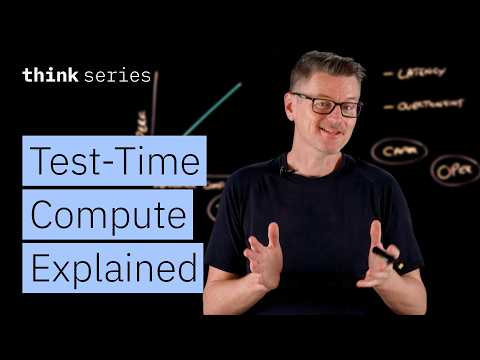 Why AI Models Pause to Think: Test Time Compute Explained
IBM Technology explains the reasons why AI models exhibit pauses during interaction, describing the concept of test time computation for decision-making processes.
Why AI Models Pause to Think: Test Time Compute Explained
IBM Technology explains the reasons why AI models exhibit pauses during interaction, describing the concept of test time computation for decision-making processes.
Podcasts
 Breaking down the 2026 Stanford AI Index Report
An analysis of the 2026 Stanford AI Index Report highlights AI models' success in math competitions alongside ongoing struggles with basic tasks like reading analog clocks.
Breaking down the 2026 Stanford AI Index Report
An analysis of the 2026 Stanford AI Index Report highlights AI models' success in math competitions alongside ongoing struggles with basic tasks like reading analog clocks.
 AI for Interoperability in Health Care: Philips’s Carla Goulart Peron
Philips’s chief medical officer Carla Goulart Peron discusses how artificial intelligence supports interoperability in health care systems to improve patient outcomes and clinical workflows.
AI for Interoperability in Health Care: Philips’s Carla Goulart Peron
Philips’s chief medical officer Carla Goulart Peron discusses how artificial intelligence supports interoperability in health care systems to improve patient outcomes and clinical workflows.
Also this week
- Debug web apps with browser use in Codex (OpenAI)
- Topic-Aware Summarization of Lived Health Care Experiences: Large Language Model Evaluation Study (JMIR Medical Informatics)
- AI-Powered Resting 12-Lead Electrocardiogram Algorithm for Predicting Low Peak Oxygen Consumption: Development and Validation Study (JMIR Medical Informatics)
- AI-Generated Multiple Mini Interview (MMI) Stations for Medical School Admissions: Psychometric Evaluation (JMIR Medical Education)
- A Machine Learning Approach to Voice-Based Parkinson Disease Screening Using Multiview Spectrogram and Speech Recognition Features: Diagnostic Study (JMIR Medical Informatics)
- AI That’s Too Dangerous For You? What we learned from S.A.T.A.N (IBM Technology)
- Head-to-head evaluation of ChatGPT, DeepSeek, and Perplexity on acid-base disorder case clinical management and drug treatment: Accuracy, domain performance, and response consistency assessment (PubMed AI in medical education)
- Clinical artificial intelligence applications of vision-language foundation models (PubMed AI in medical education)
- An AI-Driven H5P Training for Epilepsy Emergency Management Preparedness in Dental Education (PubMed AI in medical education)
- Benchmarking Large Language Models for Safety Data Extraction (arXiv cs.CL)
- BioDivergence: A Benchmark and Evaluation Framework for Hidden Contextual Contradictions in Biomedical Abstracts (arXiv cs.CL)
- Energy-Efficient On-Device RAG on a Mobile NPU: System Design and Benchmark on Snapdragon X Elite (arXiv cs.CL)
- nvidia/diffusiongemma-26B-A4B-it-NVFP4 · Hugging Face (r/LocalLLaMA weekly top)
- FIRST-ICU: forecasting interventions and risk stratification in the ICU using graph neural network autoencoders (npj Digital Medicine)
- Embeddings of clinical codes enable knowledge-grounded AI in medicine (npj Digital Medicine)
- A systematic review of explainable artificial intelligence and cardiac electrophysiological models addressing sports-related sudden cardiac death and arrest in adolescents and young adults (npj Digital Medicine)
- How can reasoning capability empower the AI copilot robot in endoscopic surgery (npj Digital Medicine)
- Clinical Profile and Genomic Characterization of the 2026 Bundibugyo Virus Index Case in Uganda (Nature Medicine)
- Daily activity patterns from wearable accelerometry predict physical frailty and concern about falling (npj Digital Medicine)
- An ultrasound foundation model for the stratification of vision impairment and eye cancer risk (npj Digital Medicine)
- Microglia at a key inflection point in Alzheimer’s disease (Nature Medicine)
- Claude Fable 5 Ultimate Test - Is THIS The Closest Thing to AGI? (Bijan Bowen)
- Machine Learning for Intraoperative Bleeding Prediction in Patients Undergoing Surgery: Scoping Review (JMIR Medical Informatics)
- Fable 5 Raises the Bar for AI Ambition (The AI Daily Brief)
- Anthropic's Model Naming, Extrapolated (Hacker News (LLM, 100+ points))
- Claude Fable 5 - Full 319 page Breakdown (AI Explained)
- Understanding Transformer-Based Classifications of Medical Text Using a Large Language Model for the Attribution of Feature Importance: Proof-of-Concept Algorithm Development and Validation Study (JMIR Medical Informatics)
- The role of emerging technology in expanding regional anesthesia education and patient access (PubMed AI in medical education)
- Self-learning and Simulation in the 21st Century: From Textbooks to ChatGPT (PubMed AI in medical education)
- Explainable Machine Learning Integrating Patient and Environmental Factors for Predicting Multidrug-Resistant Organism Colonization or Infection on ICU Admission (PubMed AI in medical education)
- Application of an artificial-intelligence-based transesophageal echocardiography simulation system in residency training (PubMed AI in medical education)
- Evaluating a DeepSeek-Based Case-Based Learning Approach for Teaching the Emergency Management of Urosepsis to Nursing Students (PubMed AI in medical education)
- Integrating Artificial Intelligence-Based Simulation into Serious Illness Conversation Training: A Pilot Medical Student Intervention (PubMed AI in medical education)
- Exploring the capabilities of three artificial intelligence chatbots in diagnosis and decision-making of age-related macular degeneration (PubMed AI in medical education)
- Artificial intelligence and medical retina training: A scoping review of educational opportunities, emerging risks, and curricular responses (PubMed AI in medical education)
- Without open source LLMs, US AI companies could have already monopoled the technology (r/LocalLLaMA weekly top)
- Development and application of an intelligent assessment system for medical clinical skill training (npj Digital Medicine)
- Smartphone-based detection of subtle memory decline in prodromal Alzheimer’s disease (npj Digital Medicine)
- Human, AI collaboration for dysphagia rehabilitation from effectiveness to implementation complexity: a systematic review (npj Digital Medicine)
- Brain Health for Economic Resilience: a data-driven framework for the brain-positive economic transition (Nature Medicine)
- Dual-target gene therapy in Parkinson’s disease: a multicenter phase 1 trial (Nature Medicine)
- Noninvasive PPROM risk stratification with explainable AI using routine antenatal CRP and albumin (npj Digital Medicine)
- Benchmarking deep learning architectures for MALDI-TOF mass spectrometry in infectious disease diagnostics and vector-borne disease surveillance (npj Digital Medicine)
- AI-assisted improvement of endoscopic diagnosis of ampullary lesions (npj Digital Medicine)
- Deployable real-time spinal endoscopic instance segmentation with lightweight multi-scale attention mechanism (npj Digital Medicine)
- Initial impressions of Claude Fable 5 (Simon Willison's weblog)
- Can Voice Agents Handle Bilingual Customers? Benchmarking Frontier ASR on Code-Switched Speech (Hugging Face blog)
- Introducing Claude Fable 5 (Anthropic)
- Development and clinical usability assessment of a web-based AI platform for automated echocardiography analysis (PubMed AI in medical education)
- Predicting 5-Year Mortality in Non-Small-Cell Lung Cancer Using the Korean Central Cancer Registry: Model Development and Validation Study (JMIR Medical Informatics)
- Re-Centering Clinical Documentation in the Age of AI Scribes: Four Aims of the Patient Chart Note (JMIR Medical Education)
- Perspectives of Premedical Students at a Medical University College in Malaysia Regarding Augmented Reality Integration in Anatomy Education: Cross-Sectional Study (JMIR Medical Education)
- AI Integration in Spanish Undergraduate Medical Education: National Cross-Sectional Study (JMIR Medical Education)
- 360 Video-Based Virtual Reality for Preparing Medical Students for Body Donor Dissection: Randomized Controlled Trial (PubMed AI in medical education)
- Narrative Review on History of Point-of-Care Ultrasound Training in Critical Care (PubMed AI in medical education)
- Knowledge, Attitude, and Perception of Medical Students Toward AI-Based Learning: A Cross-Sectional Study (PubMed AI in medical education)
- Integrating AI into undergraduate medical education: an exploration of learner-centered approaches through AI (PubMed AI in medical education)
- Deep learning-based assessment of periodontitis progression using serial panoramic radiographs: a multicenter study incorporating indirect and direct grading approaches (PubMed AI in medical education)
- Reconciling how clinical reasoning is learned in the age of artificial intelligence (PubMed AI in medical education)
- Federated orthogonal learning for detection of liver lesions from multi-phase contrast-enhanced CT images (npj Digital Medicine)
- DeepSeek V4 Flash is amazing! (WIP llama.cpp PR #24162) (r/LocalLLaMA weekly top)
- Anthropic Calls for "Global AI Pause" (Wes Roth)
- Knowledge, Attitudes, Practices, Barriers, and Promotional Strategies Related to Clinical Data Interchange Standards Consortium Adoption Among Clinical Data Management Professionals: Semiqualitative Interview Study (JMIR Medical Informatics)
- Adoption and Use of Social Media in Health Care Among Medical Residents: Cross-Sectional Study (JMIR Medical Education)
- DeepMind’s New AI Found A Strange New Way To Think (Two Minute Papers)
- Histopathological Assessment of Myocardial Ischemia-Reperfusion Injury Using Transformer-Based Artificial Intelligence: Model Comparison Study (JMIR Medical Informatics)
- Development and Validation of a Scale for Measuring Leadership and Managerial Competencies of Middle Managers in Health Care and Medical Education in the Gulf Region: Cross-Sectional Study (JMIR Medical Education)
- Early Immunological Biomarkers for Personalized Treatment Selection in Severe COVID-19: Post Hoc Machine Learning Analysis of a Randomized Clinical Trial (JMIR Medical Informatics)
- Why One Law School Just Banned AI (AI in Education Podcast)
- Physical Attractiveness and Chances of Being Invited to Interview With a Medical Residency Program: Retrospective Cohort Study (JMIR Medical Education)
- From Classroom to Operating Room: Addressing Shortcomings in Gender Affirmation Surgical Education (JMIR Medical Education)
- Advancing Gastrointestinal Cancer Risk Prediction With Patient-Centered Machine Learning: Machine Learning Modeling Study (JMIR Medical Informatics)
- OpenClaw Security Risks: 6 Dangers of Autonomous AI Agents (IBM Technology)
- Clinical Note Generation From Doctor-Patient Conversations Using Parameter-Efficient Fine-Tuning Large Language Models: Comparative Study (JMIR Medical Informatics)
- Development and Interpretability Analysis of a Stacking Ensemble Model for Early Prediction of Nutritional Risk in Intensive Care Unit Patients: Retrospective Cohort Study (JMIR Medical Informatics)
- Novel Online Platform for Trauma Care-Integrating Trauma Phenotypes to Optimize the Trauma and Injury Severity Score Model: Retrospective Cohort Study (JMIR Medical Informatics)
- OpenAI frontier models and Codex are now available on AWS (Hacker News (LLM, 100+ points))
- Improving Vancomycin Therapeutic Drug Monitoring With a Deep Learning, Based Two-Compartment Predictive Model: Development and Validation Study (JMIR AI)
- Estimating a Physiological Lung Function Score and Biological Sex Using Pulmonary Function Tests and Machine Learning: Retrospective Study (JMIR AI)
- What Happens After A 1,000,000x AI Compute Leap? | Jeff Dean (Two Minute Papers)
- CS336: Language Modeling from Scratch (Hacker News (LLM, 100+ points))
- MiniMax M3 IS INSANE! BEST Opensource AI Model! Beats Opus 4.7 and 50x Cheaper! (Fully Tested) (WorldofAI)
- The Role of Multimodal Generative AI in Older Adults’ Health Management: Systematic Scoping Review (JMIR AI)
- Multimodal GPT-5 for Predicting Poor Functional Outcomes After Intracerebral Hemorrhage in the Emergency Department: Validation Study (JMIR AI)
Comments
Joining the discussion requires a free GitHub account. Comments are stored publicly on the site's GitHub Discussions board, so leave out anything you would not post in public, such as patient details, student records, or exam content. Comments are moderated.